Migration on our continent is a sign of the times that challenges our Christian and human conscience. Millions of brothers and sisters are forced to leave their homes because of violence, poverty, lack of opportunity, or persecution. This phenomenon is not foreign to our communities, for it touches the lives of families directly. Corpus Christi reminds us that Christ becomes food for all, and in that gesture invites us to open our eyes and our hearts to those who journey in search of a place to live with dignity.
Yet this reality cannot be seen solely as a human drama, but as a social and pastoral challenge that demands concrete responses. Socially, migration exposes the fragility of our economic and political structures, the lack of equity in access to opportunity, and the need to build more inclusive societies. Pastorally, it confronts us with the urgency of being open communities, capable of welcoming, accompanying, and healing the wounds of those who arrive with stories of uprootedness and hope.
Bishop Dom Hélder Câmara used to say: “When I give bread to the poor, they call me a saint; when I ask why the poor have no bread, they call me a communist.” This reminds us that hospitality and solidarity cannot remain isolated gestures, but must become a permanent attitude of justice and transformation. Migration compels us to ask about the deep causes of inequality and to commit ourselves to building a continent where no one is forced to flee in order to survive.
Raising awareness among our peoples about the consequences of migration is an urgent task and a call that admits no delay. We cannot remain indifferent to the pain of those who cross borders in the hope of a better future. Indifference is, in itself, a form of silent violence, because it ignores suffering and perpetuates exclusion. Migration brings with it social, cultural, and spiritual challenges that require our attention and active commitment.
Among the fundamental aspects we must consider are: the breakdown of families that severs essential bonds; the vulnerability of children and young people exposed to risks of exploitation and abandonment; labor exploitation that turns need into abuse; the loss of cultural identity that impoverishes both the migrant and the society that receives them; and the emotional impact that leaves deep marks on both those who migrate and those who welcome them. These five elements show us that migration is not an isolated phenomenon, but a reality that touches the very heart of our communities.
Indifference toward the reality of migration is a wound that runs through our communities and cannot be ignored. This complicit silence is overcome only through concrete gestures of welcome, through public policies that protect the dignity of every person, through communities that walk alongside migrants, and through hearts that open themselves to fraternity. Migration is not a problem solved through indifference, but a call to social and pastoral conversion.
Patriarch Bartholomew I of Constantinople, an Orthodox leader, has forcefully reminded us: “Hospitality toward the stranger is not an option, but a divine mandate that reminds us that we are all pilgrims on this earth.” His words invite us to understand that every migrant is a brother or sister, and that indifference is a form of social enslavement. Opening our doors and our hearts is a prophetic act that allows us to contemplate the face of Christ in every migrant and to build a more human, just, and fraternal world.
Migration, viewed through the lens of faith and pastoral mission, is an opportunity to rediscover our vocation of service and hospitality, transforming schools, parishes, and families into places of encounter where every migrant is welcomed as a brother or sister. At the same time, governments bear the responsibility of implementing just migration policies, social integration programs, access to education and health care, and the protection of human rights, not merely controlling borders, but building bridges of solidarity that allow migrants to become active members of the society that receives them.
In Colombia, migration and forced displacement are experienced within a context marked by decades of violence, insecurity, and political polarization that have fractured the social fabric. Thousands of families have had to abandon their homes, becoming internally displaced persons or seeking refuge in other countries. This reality demands that the support network of churches and non-governmental organizations be not merely an ideal, but a concrete practice that responds to the open wounds of our history.
Political division and social exclusion have created an atmosphere of distrust that affects the way we receive migrants and displaced persons. In this setting, churches and NGOs are called to be bridges of reconciliation, spaces where fraternity overcomes ideological barriers and human dignity prevails. As Nelson Mandela reminded us: “True freedom is not merely to cast off one’s own chains, but to live in a way that respects and enhances the freedom of others.” Only when we commit ourselves to improving the lives of those who suffer can we speak of true freedom and reconciliation.
Safeguarding the most vulnerable is a priority. Migrant children, displaced elders, and women exposed to violence need special protection. The voice of martyrs and saints such as Saint Óscar Romero, who denounced injustice in El Salvador, and Dorothy Day, who defended the dignity of the poor in the United States, inspires us not to remain silent in the face of suffering.
The participation of the Christian world is essential. We cannot reduce faith to isolated rites; we must embody it in concrete actions of justice and mercy. Religious communities, lay movements, and parishes have the mission of educating in fraternity, of extending a hand to the migrant, and of being witnesses to a love that knows no borders.
The solemnity of Corpus Christi reminds us that Jesus gives himself as the Living Bread come down from heaven, and he does so out of love, especially for the most vulnerable: the poor, migrants, and the children and elders who suffer uprootedness. To contemplate the Eucharist is to contemplate Christ who is broken and shared, who becomes food to sustain those who need it most. In the face of the poor and of migrants, the universal Church is called to recognize the living presence of the Lord who challenges us and asks us to open our hearts.
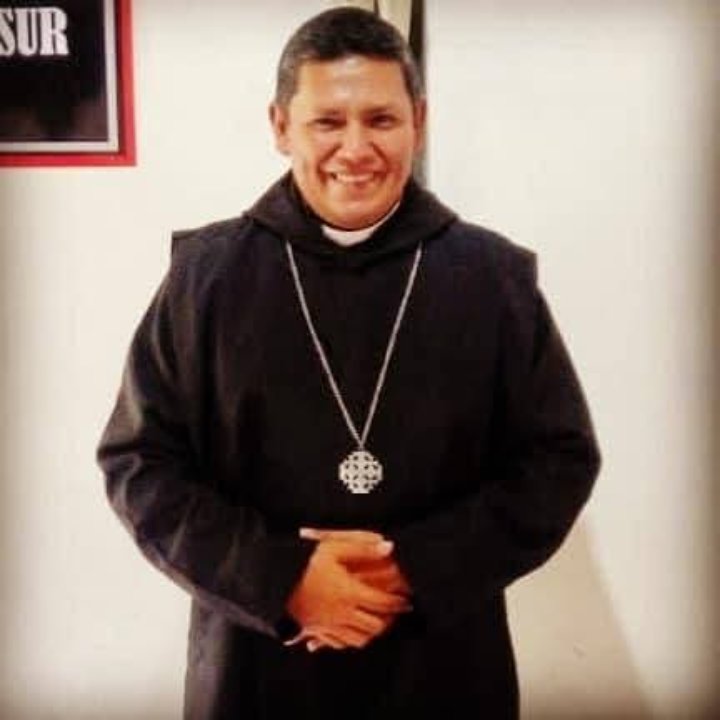
This call urges us to renew our faith and our pastoral commitment. As a bishop and servant of migrant communities, I raise my voice to recall that migration is not a threat, but an opportunity to grow in humanity. United in prayer and action, we can build a continent where no one feels like a stranger, because we are all children of the same Father, and where every gesture of welcome is a sign of the communion we celebrate at the altar.